The Fascinating Science of Sleep
Sleep isn't just "turning off" for the night - it's an active, complex process that's essential for your physical and mental health. Understanding how sleep cycles work can help you optimize your rest and wake up feeling refreshed.
What Are Sleep Cycles?
During a typical night, you go through 4-6 sleep cycles, each lasting about 90 minutes. Each cycle consists of different stages of sleep, each serving important functions.
The Stages of Sleep
Stage 1: Light Sleep (N1)
This is the transition between wakefulness and sleep, lasting just a few minutes. Your muscles relax, your heartbeat slows, and you can be easily awakened.
Stage 2: Deeper Light Sleep (N2)
Your body temperature drops, your heart rate slows further, and your brain begins to produce sleep spindles - bursts of brain activity that help consolidate memories.
Stage 3: Deep Sleep (N3)
This is the most restorative stage. Your body repairs tissues, builds bone and muscle, and strengthens your immune system. It's very difficult to wake someone from deep sleep.
REM Sleep (Rapid Eye Movement)
This is when most dreaming occurs. Your brain is highly active, processing emotions and consolidating memories. Your eyes move rapidly, but your body is temporarily paralyzed to prevent you from acting out dreams.
Why Sleep Cycles Matter
Waking up in the middle of a deep sleep cycle can leave you feeling groggy and disoriented - this is called sleep inertia. Ideally, you want to wake up at the end of a complete cycle, during light sleep or REM.
This is why you might feel more refreshed after 7.5 hours of sleep (5 complete cycles) than after 8 hours (waking mid-cycle).
How Much Sleep Do You Need?
- Adults (18-64): 7-9 hours
- Teenagers (14-17): 8-10 hours
- School-age children (6-13): 9-11 hours
- Preschoolers (3-5): 10-13 hours
The 90-Minute Rule
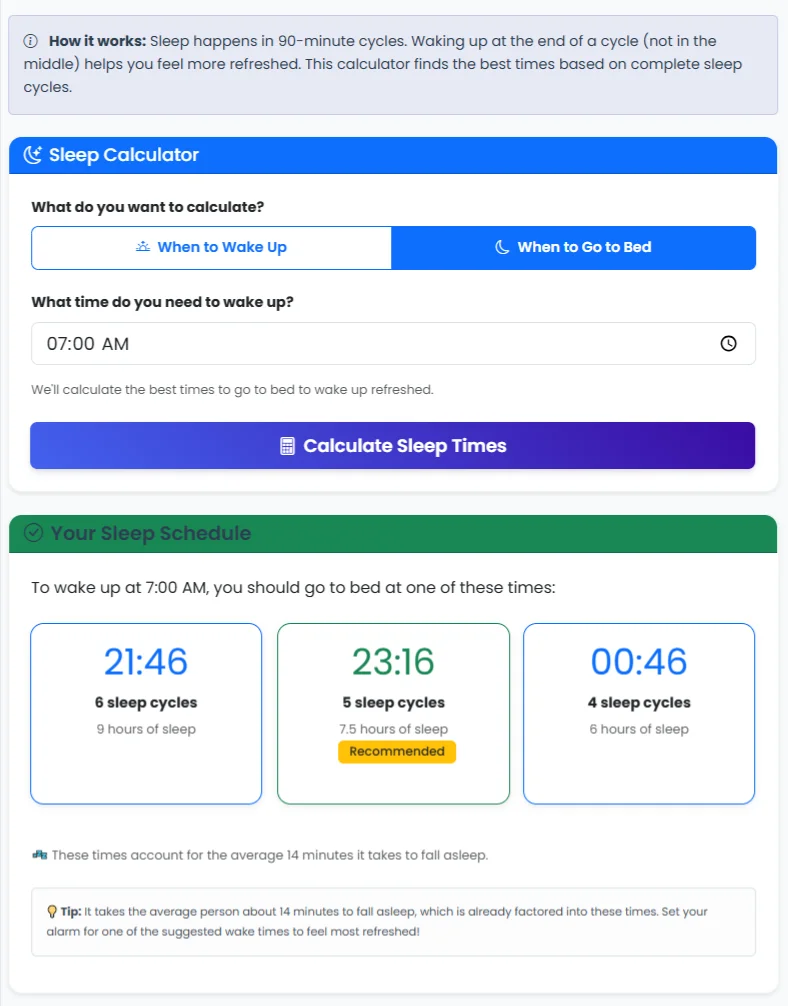
Since sleep cycles last about 90 minutes, try to sleep in multiples of 90 minutes:
- 4.5 hours (3 cycles)
- 6 hours (4 cycles)
- 7.5 hours (5 cycles)
- 9 hours (6 cycles)
Using Our Sleep Calculator
Our free sleep calculator helps you find the perfect bedtime or wake time based on sleep cycles. Simply:
- Enter when you need to wake up
- See recommended bedtimes for complete sleep cycles
- Or enter when you're going to bed and see ideal wake times
Remember to account for the 10-15 minutes it typically takes to fall asleep!
Factors That Affect Sleep Quality
Light Exposure
Blue light from screens can suppress melatonin production. Avoid screens 1-2 hours before bed, or use blue light filters.
Temperature
Your body temperature naturally drops during sleep. Keep your bedroom cool (60-67°F or 15-19°C) for optimal sleep.
Caffeine and Alcohol
Caffeine can stay in your system for 6-8 hours. Alcohol might help you fall asleep but disrupts sleep cycles later in the night.
Exercise
Regular exercise improves sleep quality, but avoid vigorous exercise close to bedtime.
Signs of Poor Sleep Quality
- Difficulty falling asleep (taking more than 30 minutes)
- Waking up frequently during the night
- Waking up too early and can't fall back asleep
- Feeling tired despite sleeping enough hours
- Daytime sleepiness or fatigue
- Difficulty concentrating
- Mood changes or irritability
Tips for Better Sleep
- Stick to a consistent sleep schedule, even on weekends
- Create a relaxing bedtime routine
- Make your bedroom dark, quiet, and cool
- Avoid large meals, caffeine, and alcohol before bed
- Get regular exercise, but not too close to bedtime
- Manage stress through meditation or journaling
- Limit daytime naps to 20-30 minutes
Conclusion
Understanding your sleep cycles is the first step to better rest. By timing your sleep in 90-minute increments and creating healthy sleep habits, you can wake up feeling refreshed and energized.
Use our free sleep calculator to find your perfect sleep schedule and start getting the quality rest you deserve!