The Great Measurement Divide: Metric vs Imperial
Have you ever wondered why some countries use meters while others use feet? Or why a recipe calls for grams when your kitchen scale shows ounces? Welcome to the world of unit conversion!
In this guide, we'll explore the differences between the metric and imperial systems, learn common conversions, and discover when to use each system.
What is the Metric System?
The metric system (also called the International System of Units or SI) is used by most countries worldwide. It's based on powers of 10, making conversions straightforward:
- Length: millimeters, centimeters, meters, kilometers
- Weight: milligrams, grams, kilograms
- Volume: milliliters, liters
- Temperature: Celsius
What is the Imperial System?
The imperial system is primarily used in the United States. It includes units like:
- Length: inches, feet, yards, miles
- Weight: ounces, pounds, tons
- Volume: fluid ounces, cups, pints, quarts, gallons
- Temperature: Fahrenheit
Common Unit Conversions
Length Conversions
- 1 inch = 2.54 centimeters
- 1 foot = 30.48 centimeters
- 1 meter = 3.28 feet
- 1 mile = 1.61 kilometers
Weight Conversions
- 1 ounce = 28.35 grams
- 1 pound = 0.45 kilograms
- 1 kilogram = 2.20 pounds
Temperature Conversions
- Celsius to Fahrenheit: (°C × 9/5) + 32
- Fahrenheit to Celsius: (°F - 32) × 5/9
- 0°C = 32°F (freezing point of water)
- 100°C = 212°F (boiling point of water)
When to Use Each System
Use Metric When:
- Working in science or medicine
- Traveling internationally
- Following international recipes
- Working with precision measurements
Use Imperial When:
- Living or working in the United States
- Following American recipes
- Working in certain industries (construction in the US)
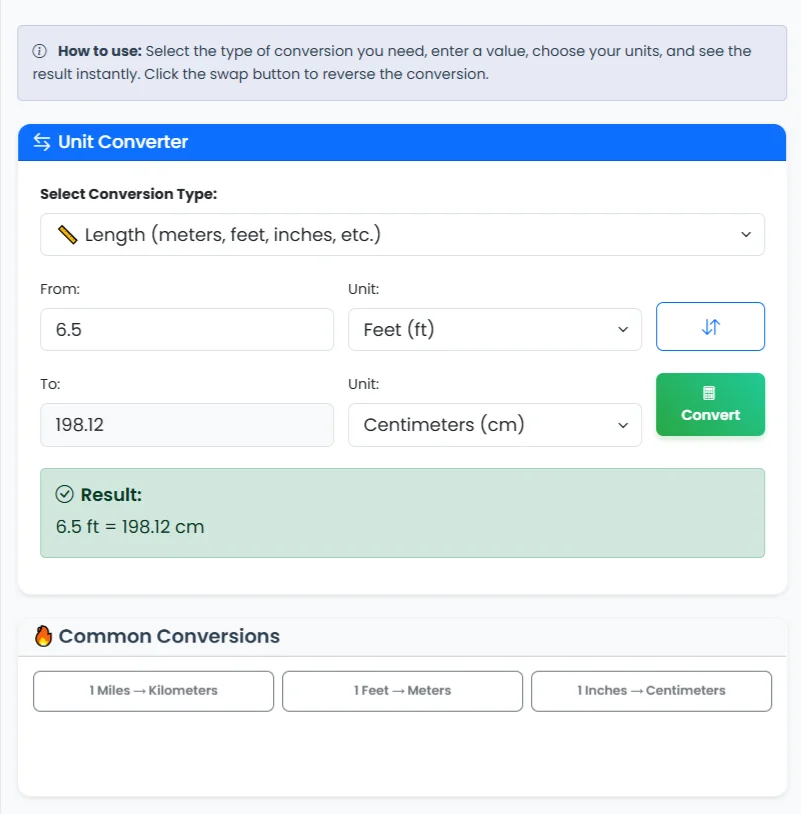
Using Our Free Unit Converter
Instead of memorizing all these conversions, use our free online unit converter! It supports:
- Length (meters, feet, inches, miles, etc.)
- Weight (kilograms, pounds, ounces, etc.)
- Temperature (Celsius, Fahrenheit, Kelvin)
- Area (square meters, acres, etc.)
- Volume (liters, gallons, cups, etc.)
- Speed (km/h, mph, etc.)
- Time (seconds, minutes, hours, etc.)
Simply select your conversion type, enter your value, and get instant, accurate results!
Conclusion
Understanding unit conversions is essential in our globalized world. Whether you're cooking, traveling, studying, or working, knowing how to convert between metric and imperial units will make your life easier.
Bookmark our free unit converter tool and never struggle with conversions again!